
It’s rare for students to score a perfect 1600 on the SAT on their first try. However, you can always improve your overall SAT score from one test date to the next as long as you have a plan and put in the hard work to follow it. Here are 10 SAT score improvement tips you can use when studying for the test and on test day itself.
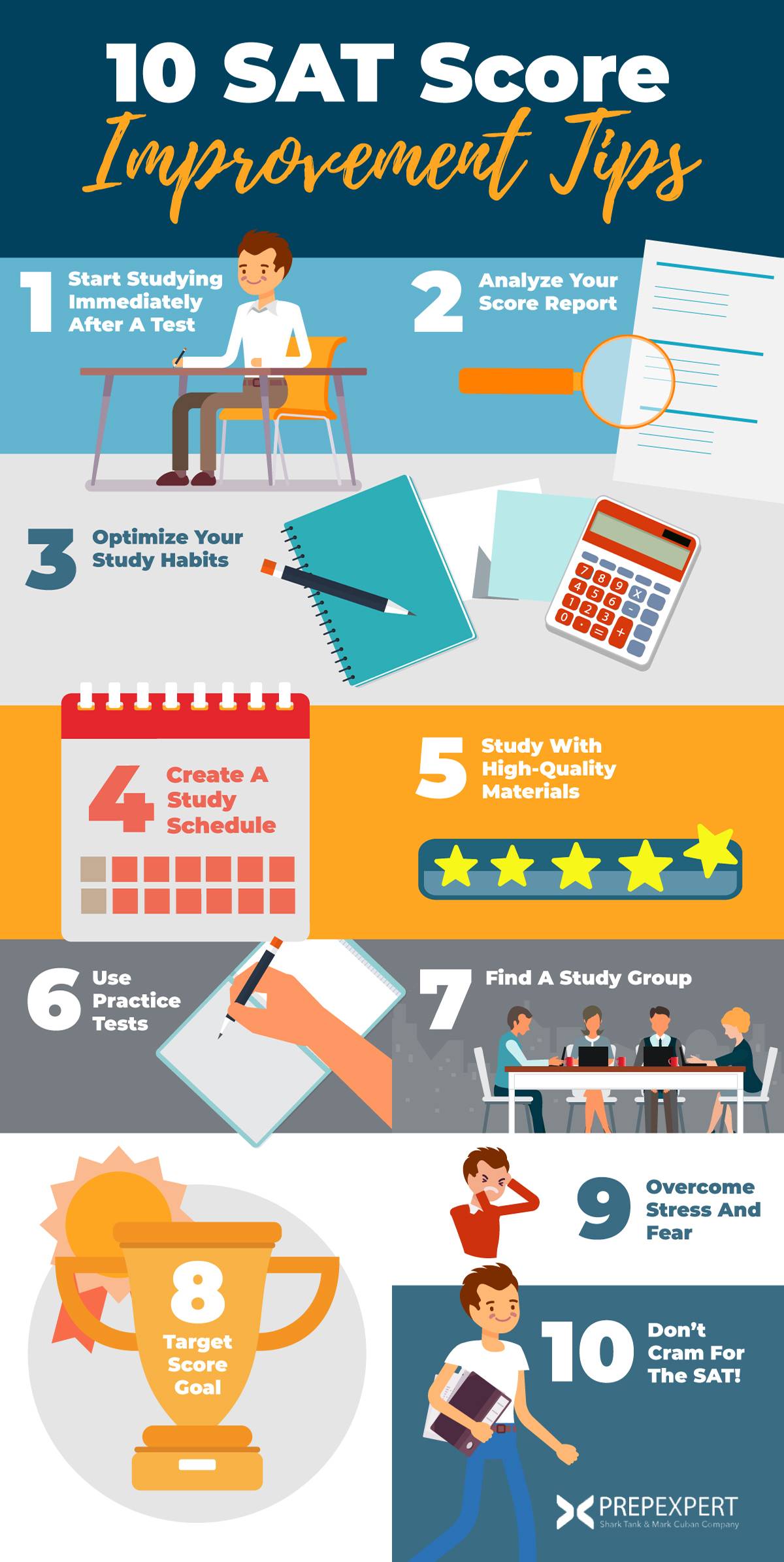
1. Review your score report right away
The Digital SAT gives you detailed skill feedback as soon as your scores are released. Look closely at the areas where you struggled—whether it’s interpreting short passages, analyzing data, or solving multi‑step math problems—and use that breakdown to guide your next round of studying.
Related: Debunk the Top 5 Myths About the SAT
2. Build your study plan around your weak spots
Because the Digital SAT is adaptive, strengthening your weaker skills can make a big difference. If your Reading & Writing module placed you in easier questions, focus on comprehension, transitions, and evidence‑based reasoning. If Math held you back, target algebra fluency and calculator‑based problem solving.
3. Use high‑quality materials that match the digital format
The most effective prep mirrors the real test. The Bluebook app offers official practice tests that replicate the adaptive structure, timing, and interface. Khan Academy still provides helpful SAT practice, and many reputable prep companies now offer Digital SAT‑specific drills.
Related: Check out Our Best Advice for Homework, Studying, and Tests
4. Practice in the actual testing interface
Since the SAT is fully digital, getting comfortable with the Bluebook layout matters. Use the built‑in calculator, practice navigating questions, and get used to the shorter reading passages. Familiarity reduces stress and helps you move more confidently through each module.
5. Warm up with short practice sessions
The Digital SAT is shorter than the old paper version, so your prep can be more focused. Quick 20–30 minute drills help you build accuracy and speed without burning out. Treat these warm‑ups like mental stretching before a workout.
6. Simulate real testing conditions when possible
Even though the test is shorter, pacing still matters. Try a full Bluebook practice test in one sitting to get used to the timing of adaptive modules. Sit at a desk, remove distractions, and follow the official time limits to build realistic endurance.
Related: Understanding Standardized Tests and Scores
7. Study with friends or join a prep group
Accountability makes studying more consistent and more fun. Share strategies, compare tricky questions, and help each other stay motivated. A study group can give you new ways to approach problems and keep you on track.
8. Set a clear score goal
Whether you’re aiming for a scholarship or trying to reach a college’s preferred range, having a target score keeps your studying focused. Use your initial practice test to estimate how many points you need to gain and which skills will help you get there.
Related: How to Set Reasonable Expectations for Your SAT or ACT Scores
9. Manage stress and take breaks
The Digital SAT rewards clear thinking. Build breaks into your study schedule, get enough sleep, and use simple grounding techniques on test day. Staying calm helps you perform better — especially as questions adjust to your skill level.
10. Don’t cram the night before
Last‑minute studying won’t meaningfully boost your score. Instead, skim a few practice questions, pack what you need for test day, and get a good night’s sleep. Showing up rested is one of the easiest ways to improve your performance.
Related: How to Improve Your Time Management and Study Skills